
What Are UV Light Accelerated Weathering Testers and How Do They Work?
March 24, 2026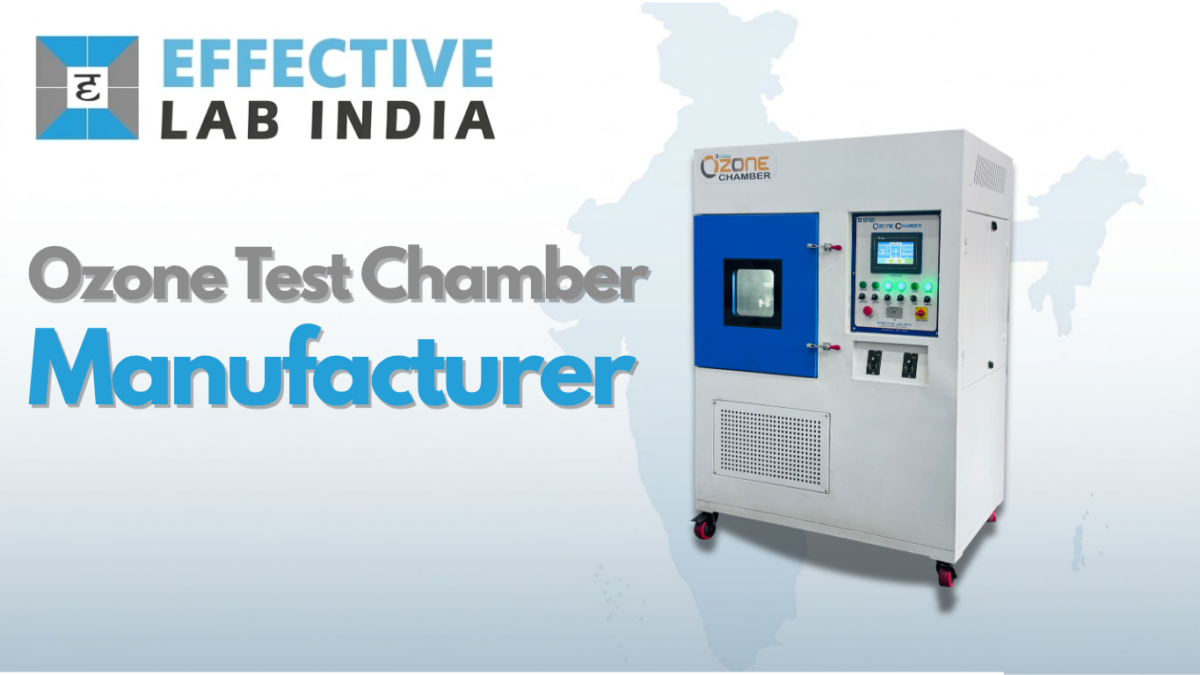
Ozone Test Chamber Manufacturer: In high-stakes manufacturing environments, the integrity of rubber, elastomers, polymers, and coatings cannot be left to chance. Product failure in the field — cracked seals, degraded gaskets, deteriorating cables — carries tremendous costs in warranty claims, recalls, and reputational damage.
Enter the trusted ozone test chamber manufacturer, your strategic partner in quality control pipeline management.
An ozone test chamber mimics accelerated ozone exposure and thus can help determine how materials will behave over years of use in the real world, within a few hours or days. If implemented properly and integrated into the production workflow, these chambers are a frontline defense against defective product releases.
This Is an Ozone Test Chamber, and It’s Important
An ozone test chamber is a sealed enclosure system specifically designed to generate controlled ozone environments with accurately defined concentrations, temperature, and humidity. Materials or end-components are subject to elevated concentrations of ozone over time in the chamber, simulating faster-than-normal atmospheric aging.
Ozone, even in trace atmospheric concentrations, reacts very easily with unsaturated rubber compounds. Build a Sensor to Measure Craze Growth due to Polymer Exposure. A craze is a permanent and visible fracture in an elastomer. Without testing, this crack would not be discovered until months or years of use in the field — far too tardy to prevent failure.
Testing for ozone is not optional for manufacturers of automotive seals, industrial hoses, cable sheathing, conveyor belts, medical tubing, and aerospace components. It is an essential aspect of design validation and continued quality assurance.
“A trustworthy ozone test chamber manufacturer is more than an equipment supplier — they are the technical basis of your material qualification process.”
How to Add an Ozone Test Chamber to Your QC Pipeline
An ozone test chamber is only as valuable as the value that is embedded into your quality control workflow — one that does not treat the instrument itself as a standalone, isolated run. This is how some of the leading manufacturers do it as they integrate this:
- Incoming Material Qualification: Prior to any new rubber compound or elastomer formulation going into production, ozone exposure validation is necessary. Chambers are used to test batches for conformance with approved material specifications, such as validating that incoming raw materials meet the engineering standard for ozone resistance. This is to ensure that non-conforming materials are not allowed further into the production cycle.
- Design Validation During Product Development: Ozone test chambers support engineers during the R&D and prototyping phases by allowing specialists to expose multiple geometries or compound formulations to identical conditions of exposure. The chamber serves up objective, reproducible data one can use in making go/no-go decisions before tooling investment. Iterations are quicker, and material selection is more data-driven.
- In-Process Quality Checks: For high-volume production lines, end-of-line sample and ozone testing of finished components creates stability between the sequences. Variances in mixed compounds, curing temperatures, or ingredient ratios can impact ozone resistance, and in-process testing detects those problems before a complete batch is left the door.
- Final Batch Release Testing: Documentation of ozone test results is required before releasing products in many industries, especially automotive, aerospace, and medical. A properly configured ozone test chamber would produce test reports not only conforming with ASTM D1171, ISO 1431-1, and DIN 53509 standards but also providing the compliance documents needed by OEM customers and regulatory agencies.
Essential Technical Features You Should Expect from a Top Ozone Test Chamber Manufacturer
Not every ozone test chamber is the same. Engineers evaluating ozone test chambers from any manufacturer should pay careful attention to the following technical specifications:
- Ozone range and stability: A premium chamber keeps ozone concentration within a tight band throughout the test — usually ±5% of setpoint. Search for PDCs that facilitate concentration reading variations up from 25 pphm to 200 pphm, or even better for aggressive test methods.
- Temperature and humidity control: An integrated temperature (typically 20°C to 70°C) and relative humidity simultaneous control system is critical for combined-environment testing to replicate real-world operating conditions.
- Uniformity of concentration in the chamber: Airflow design can directly impact how uniform concentrations are across the test volume. Multi-specimen testing is a common practice, and such poor ozone distribution will produce inconsistent results between each test specimen, thus becoming one of the failure points in multi-sample testing.
- Dynamic test functionality: Static ozone tests subject specimens in a stress-free, static state. Dynamic ozone chambers apply mechanical strain — 0% to 25% elongation — and this proceeds to wildly hasten surface crack initiation. It provides all of the information that manufacturers require regarding material performance under operational stress.
- Safety and exhaust systems: Ozone at test concentrations is dangerous to human health. Ozone decomposition catalysts and active exhaust management ensure compliance with lab safety standards as found in professional-grade chambers.
What does it cost and why? The sizing of the Ozone Chamber for Rubber Test
How much should we budget to get a good ozone test chamber? is one of the more common questions that the procurement and engineering teams ask. There are many technical and operational factors contributing to the price of an ozone chamber for rubber testing.
Basic static ozone test chambers that can run compliance tests in a lab start at the ground price level and are accessible for small-to-medium manufacturers. And when it comes to advanced chambers — high volumes, automatic specimen loading methods, humidity integration, PLC-based automation, data logging, and many other capabilities offered by the big brands — a higher investment is often justified by the throughput and versatility provided.
Key cost drivers include:
- Chamber volume and internal test area size
- Ozone generator technology (based on UV, or corona discharge)
- Accuracy and stability of measurement systems for concentration
- Conformance to specific testing standards (ASTM, ISO, DIN)
- Gathering data, reporting, and remote monitoring capabilities
- After-sales calibration and service availability of the spare parts
When determining the cost of an ozone chamber for rubber testing, it is essential to evaluate its total ownership costs, not acquisition costs. A continuous-flow ozone test chamber from an established manufacturer with a strong reputation for long-term technical support, calibration services, and spare parts will provide far better lifecycle value than a cheaper option that lacks this level of infrastructure.
Suggested Post:
What is an ozone test chamber and its applications and uses?
What Are UV Light Accelerated Weathering Testers and How Do They Work?
Standards for Compliance: Your Ozone Test Chamber Should Support
For regulated industries, a chamber that is unable to produce test reports in conformance with internationally accepted standards has little value. Ozone resistance testing typically references the following standards:
- ASTM D1171: Standard test method for rubber deterioration — surface ozone cracking in the atmosphere or under static tensile deformation in a chamber
- ISO 1431-1: Rubber, vulcanized or thermoplastic — Resistance to ozone cracking (static strain)
- ISO 1431-3: Guidance for reference and alternative methods of measuring the ozone concentration in laboratory test chambers
- DIN 53509: Testing of rubber — Resistance to ozone cracking, a non-negotiable due diligence step in the procurement process, confirms that a given potential ozone test chamber manufacturer designs and validates its apparatus against these standards.
How To Select An Ozone Test Chamber Manufacturer For Your Operation
An ozone test chamber is more than just a purchase transaction. The right partner provides engineering capabilities, calibration services, regulatory knowledge, and technical support that grow with your testing needs.
When assessing manufacturers, you may want to consider their experience in your industry, the thoroughness of their technical documentation, their after-sales support responsiveness, and their ability to provide custom chamber configurations if standard models do not meet operational needs.
For manufacturers dedicated to zero-defect production and long-term accuracy, the right ozone test chamber — and the right manufacturing partner — is not a cost. It is a competitive advantage designed into every unit shipping from your production floor.
For More Information, please reach out to us.
Contact: (+91) 9555515525
Email: info@effectivelabindia.com
LinkedIn: Effective Lab India