How Cyclic Corrosion Chambers Simulate Real Environmental Conditions
May 30, 2026
Hot Air Oven Price in India 2026:for Labs, Industrial & Commercial Use
June 2, 2026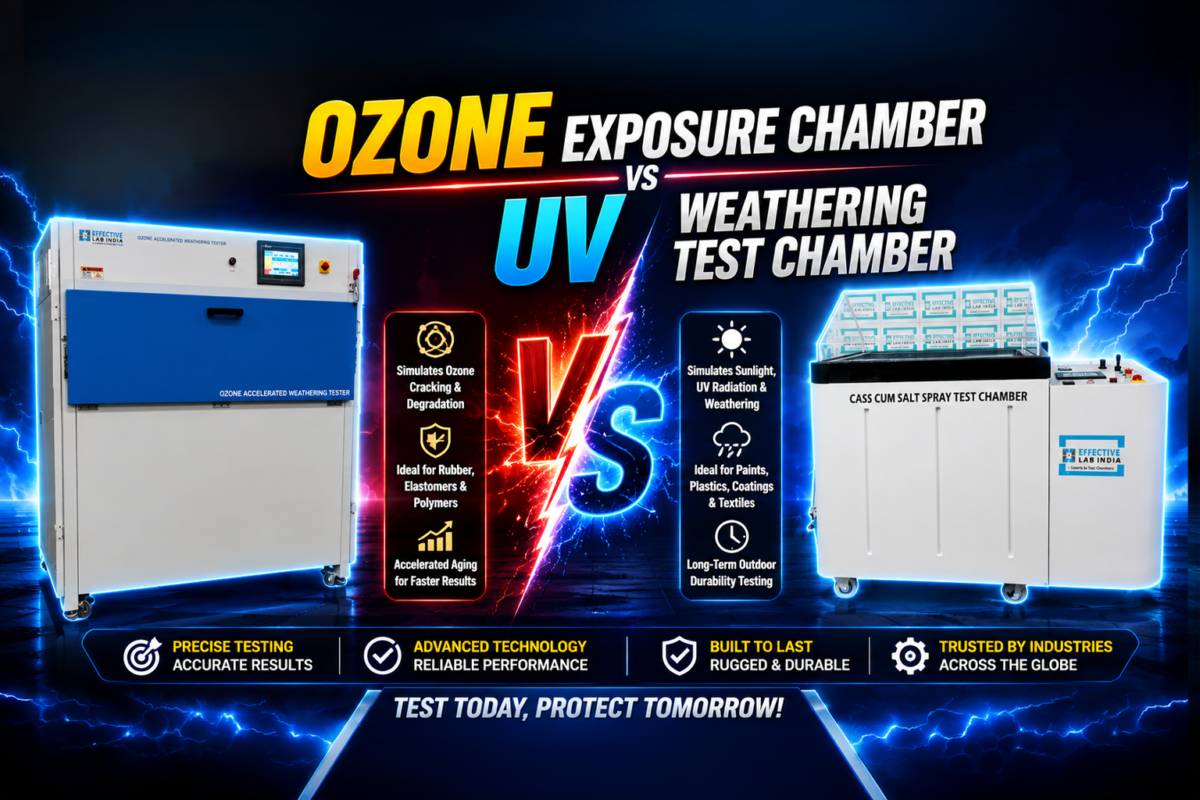
Ozone Exposure Chamber: Environmental testing chambers are critical for material durability and product quality assurance. Two of the most widely used instruments in this domain are the Ozone Testing Chamber and the UV Weathering Test Chamber. While both simulate environmental stress on materials, they work on fundamentally different principles and serve distinct testing objectives.
If you are a quality engineer, procurement specialist, or R&D professional trying to decide which chamber your lab needs — or whether you need both — this guide will walk you through everything you need to know, including how each chamber functions, the standards they follow, and how to choose the right one for your application.
Introduction to Ozone Exposure Chamber Testing
Table of Content
- 1 Introduction to Ozone Exposure Chamber Testing
- 2 What Is a UV Weathering Test Chamber and How Does It Work?
- 3 Difference Between Ozone Exposure Chamber and UV Weathering Test Chamber
- 4 How Ozone Exposure Chambers Detect Rubber Cracking
- 5 Testing Standards Used in Ozone and UV Weathering Chambers
- 6 Ozone Test Chamber and UV Weathering Test Chamber Manufacturer in India
- 7 Conclusion: Choosing the Right Environmental Testing Chamber for Your Industry
Ozone is an invisible but highly reactive gas naturally present in the Earth’s atmosphere. Even in trace concentrations, ozone can cause severe surface cracking in rubber and elastomeric materials. This phenomenon, known as ozone cracking, is a major failure mode for automotive seals, cables, hoses, gaskets, tyre sidewalls, and industrial rubber components.
An Ozone Exposure Chamber (also called an Ozone Testing Chamber or Ozone Aging Chamber) is a controlled laboratory instrument designed to simulate and accelerate the degrading effect of atmospheric ozone on materials — especially rubber, neoprene, EPDM, and other elastomers.
Inside the chamber, the ozone concentration is maintained at a precise, elevated level — typically ranging from 25 to 200 parts per hundred million (pphm) — far higher than natural ambient levels. The temperature inside is also maintained accurately, often between 20°C and 70°C. Test specimens are placed under static or dynamic mechanical strain (elongation) and exposed to this ozone-enriched atmosphere for a defined time period.
The results reveal how quickly and at what severity ozone causes surface cracks in the material under test. This data helps manufacturers validate whether their rubber formulations meet quality and safety standards before a product reaches the market.
Industries that depend on ozone testing include automotive, aerospace, defence, cable manufacturing, footwear, and oil & gas.
What Is a UV Weathering Test Chamber and How Does It Work?
While ozone attacks rubber chemically, ultraviolet (UV) radiation from the sun is responsible for a much broader range of material degradation. Plastics fade and become brittle, coatings peel and chalk, adhesives lose bond strength, and textiles lose colour — all due to prolonged UV exposure.
A UV Weathering Test Chamber (also called a UV Test Chamber or UV Aging Chamber) reproduces the damaging effects of sunlight, rain, and condensation on materials and coatings. It accelerates the outdoor weathering process so that years of sun and moisture exposure can be simulated in just days or weeks.
The chamber uses fluorescent UV lamps — typically UVA-340 or UVB-313 type — that emit UV radiation closely matching the solar spectrum. In addition to UV irradiance, the chamber cycles through:
- UV light exposure phases at controlled irradiance (W/m²) and temperature
- Condensation or water spray phases that simulate dew and rain
This combination of UV and moisture attack replicates the primary outdoor degradation mechanisms. Engineers and quality professionals use the results to compare the durability of different material formulations, coatings, paints, and surface treatments.
Common applications of UV weathering testing include automotive exterior parts, construction materials, agricultural films, outdoor furniture, marine coatings, packaging, and consumer electronics enclosures.
The test duration, UV intensity, and cycle patterns are typically defined by the applicable test standard, ensuring repeatability and comparability of results across laboratories.
Difference Between Ozone Exposure Chamber and UV Weathering Test Chamber
Although both chambers are used for accelerated aging and durability testing, they differ fundamentally in their mechanisms, target materials, and applications. Understanding these differences helps laboratories invest in the right equipment.
Nature of the Degradation Agent
An Ozone Exposure Chamber uses a chemical agent, ozone gas, to degrade materials. Ozone reacts directly with the double bonds in rubber polymers, initiating surface cracking. A UV Weathering Chamber, on the other hand, uses electromagnetic radiation (UV light) and moisture to cause photodegradation and hydrolysis in organic materials.
Target Materials
Ozone chambers are specifically designed for rubber, elastomers, and polymeric sealing materials. UV weathering chambers are used for a much broader range of materials, including coatings, paints, plastics, adhesives, textiles, and composites.
Failure Mechanism Observed
In ozone testing, the primary failure mode observed is surface cracking, particularly visible under elongation. In UV weathering testing, failure modes include colour fading (delta E), chalking, loss of gloss, embrittlement, delamination, and tensile strength reduction.
Test Parameters
Ozone chambers control ozone concentration (pphm), temperature, humidity, and specimen elongation. UV weathering chambers control UV irradiance (W/m²), temperature, and moisture (condensation or spray) cycles.
Standards Involved
Ozone testing follows standards like ISO 1431, ASTM D1149, and DIN 53509. UV weathering testing is governed by standards such as ISO 4892-3, ASTM G154, and ASTM D4587.
Duration of Testing
Ozone tests are often shorter in duration — ranging from a few hours to several days — because ozone is highly reactive. UV weathering tests typically run for hundreds or even thousands of hours to simulate years of outdoor exposure.
In many quality assurance programs, particularly in the automotive and construction sectors, both chambers are used side by side, since real-world products must withstand both ozone attack and UV degradation simultaneously.
Recent Posts:
Best Xenon Arc Weathering Test Chamber for Environmental Testing Labs
How Cyclic Corrosion Chambers Simulate Real Environmental Conditions
How Ozone Exposure Chambers Detect Rubber Cracking
The cracking mechanism that ozone induces in rubber is well understood at a molecular level. Rubber polymers contain carbon-carbon double bonds (C=C) in their backbone chains. Ozone molecules are highly reactive and preferentially attack these double bonds, breaking them and forming ozonide intermediates. These ozonides are unstable and quickly decompose, causing chain scission — the literal cutting of polymer chains.
When a rubber specimen is under mechanical strain (elongation), the polymer chains are already stretched. The ozone attack at the surface of the stretched rubber creates micro-cracks oriented perpendicular to the direction of strain. These cracks grow deeper over time with continued exposure, eventually leading to visible and measurable surface failure.
In an Ozone Exposure Chamber, rubber specimens are mounted on holding fixtures and elongated to a defined strain level — commonly 20% to 40% elongation for static tests as per ISO 1431-1. Some chambers also support dynamic (oscillating) strain to simulate conditions where rubber components are continuously flexed in service.
After exposure, specimens are examined under standard lighting conditions, often with a magnifying lens, to detect and classify the cracking pattern. The evaluation criteria typically include crack density, crack depth, crack width, and whether cracks have extended through the specimen cross-section.
This testing is especially important for:
- Automotive door seals and window gaskets — which must remain crack-free despite long-term ozone exposure under dynamic flexing
- Tyre sidewalls — where ozone cracking directly impacts road safety
- Cable sheathing and insulation — where ozone-induced cracking can lead to electrical failure
- Industrial hoses and O-rings — critical components in fluid handling systems
Ozone test Chambers can generate and maintain ozone concentrations with high precision using either UV-based ozone generators or corona discharge generators. Advanced chambers also recirculate and monitor ozone levels in real time using built-in ozone analyzers, ensuring the test environment remains stable throughout the test period.
Testing Standards Used in Ozone and UV Weathering Chambers
Standardised testing protocols are the backbone of reliable quality assurance. Using a recognised standard ensures that test results are reproducible, defensible, and accepted by international buyers, auditors, and certification bodies.
Ozone Testing Standards
- ISO 1431-1: The most widely referenced international standard for static ozone testing of vulcanised rubber. It defines specimen preparation, elongation levels, ozone concentration, temperature, and evaluation criteria.
- ISO 1431-3: Covers reference and alternative methods for determining ozone concentration in test chambers.
- ASTM D1149: The American standard for rubber deterioration — cracking in an ozone-controlled environment under static strain.
- DIN 53509: A German standard frequently referenced in European automotive supply chains.
- EN ISO 7326: Applies to rubber and plastics hoses and hose assemblies, including ozone resistance testing.
UV Weathering Testing Standards
- ISO 4892-3: Specifies the method for laboratory light source exposure using fluorescent UV lamps for plastics.
- ASTM G154: The standard practice for operating fluorescent UV lamp apparatus for UV exposure of non-metallic materials.
- ASTM D4587: Standard practice for fluorescent UV-condensation exposures of paint and related coatings.
- ISO 11507: Specifies the method for UV exposure of paints and varnishes.
- SAE J2020: Used in automotive applications for accelerated weathering using a fluorescent UV-condensation apparatus.
Compliance with these standards is often a mandatory requirement in automotive, aerospace, construction, and consumer goods industries. Manufacturers supplying to OEMs, export markets, or government procurement agencies must demonstrate compliance through third-party or in-house certified test results.
Modern ozone and UV weathering chambers from reputable manufacturers are designed and calibrated to comply with multiple standards, often incorporating programmable controllers that allow laboratories to store and execute standard-compliant test profiles with a single button press.
Ozone Test Chamber and UV Weathering Test Chamber Manufacturer in India
India’s quality testing equipment industry has grown significantly over the past two decades, driven by the expansion of the automotive, construction, and export-oriented manufacturing sectors. Domestic manufacturers now offer world-class Ozone Exposure Chambers and UV Weathering Test Chambers that meet international testing standards.
When selecting a manufacturer or supplier in India, laboratories and quality departments should evaluate the following:
Technical Specifications and Accuracy: The chamber must maintain ozone concentration, temperature, humidity, and UV irradiance within tight tolerances. Look for chambers with built-in ozone analyzers, PID controllers, and calibrated sensors.
Standard Compliance: The equipment should be designed for compliance with relevant ISO, ASTM, DIN, and SAE standards. Manufacturers should be able to provide documentation confirming this compliance.
After-Sales Support and Calibration Services: Testing chambers require periodic calibration, sensor maintenance, and occasional repairs. A manufacturer with a strong service network and a responsive technical team is essential for minimising downtime in your quality lab.
Customisation Capability: Different industries and test standards require different chamber sizes, configurations, and accessory options. A capable manufacturer should be able to customise the chamber to your specific test volume and standards requirements.
Industry References and Certifications: Reputable manufacturers will have installations in established automotive, rubber, cable, or construction companies. ISO 9001-certified manufacturing processes are a positive indicator of consistent product quality.
India-based manufacturers offer a cost advantage over imported European or American equipment while maintaining acceptable quality levels. For many mid-scale quality labs, domestically sourced equipment provides the right balance of technical capability, local support, and budget efficiency.
Suggested Post:
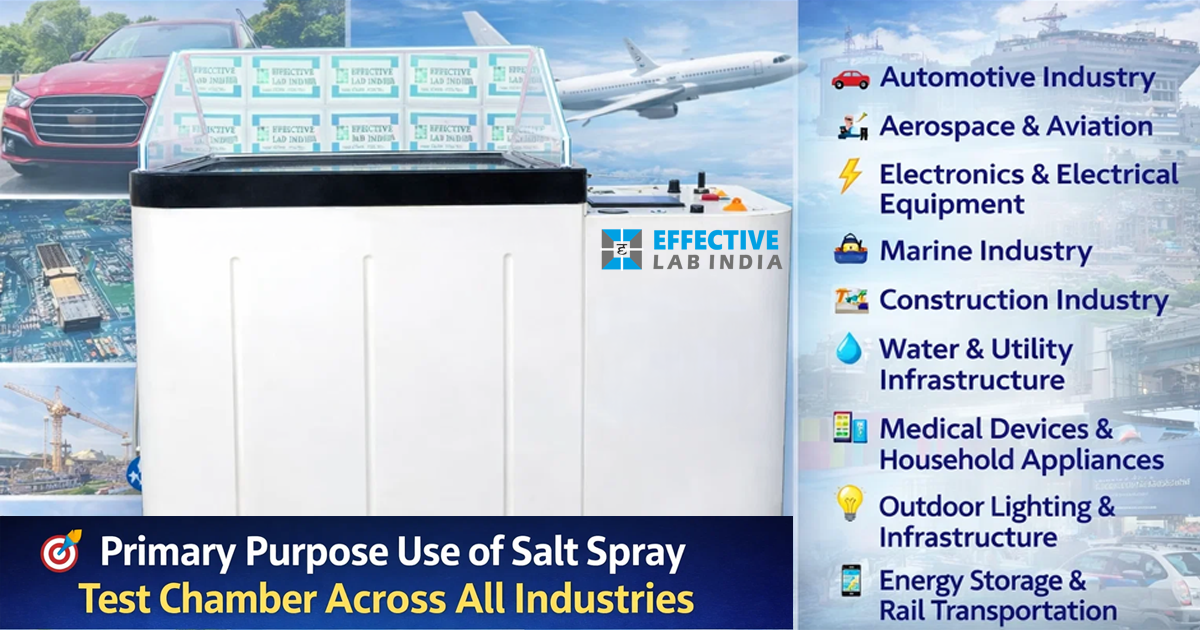
Salt Spray Test Chamber Price | Primary Purpose Across All Industries
Conclusion: Choosing the Right Environmental Testing Chamber for Your Industry
Choosing between an Ozone Exposure Chamber and a UV Weathering Test Chamber ultimately comes down to the materials you test and the degradation mechanism most relevant to your product’s end-use environment.
If your products include rubber seals, gaskets, hoses, tyres, or cable sheathing — components that must resist ozone cracking in service — an Ozone Exposure Chamber is the right primary instrument for your quality lab.
If your products involve coatings, paints, plastics, adhesives, or outdoor-exposed composites — materials that must resist UV-induced fading, chalking, and embrittlement — a UV Weathering Test Chamber is what you need.
For industries like automotive, where products must pass both ozone and UV durability requirements, investing in both chambers is the appropriate and often mandatory approach.
For laboratories and manufacturers looking for reliable, standards-compliant testing equipment in India, Effective Lab India is a trusted name in the industry. Effective Lab India is a professional manufacturer of Ozone Test Chambers and UV Weathering Test Chambers in India, offering technically sound instruments built to comply with international testing standards, including ISO, ASTM, and DIN. With a commitment to precision engineering, responsive after-sales service, and application-specific customisation, Effective Lab India supports quality laboratories across the automotive, rubber, cable, coatings, and construction sectors in achieving reliable and repeatable test results.
Investing in the right chamber — backed by the right manufacturer — is not just a laboratory decision. It is a commitment to product quality, customer safety, and long-term brand integrity.
For More Information, please reach out to us.
Contact: +91 93554 43334
Email: info@effectivelabindia.com
LinkedIn: Effective Lab India