
Ozone Test Chamber Manufacturer Quality Control Pipeline
March 27, 2026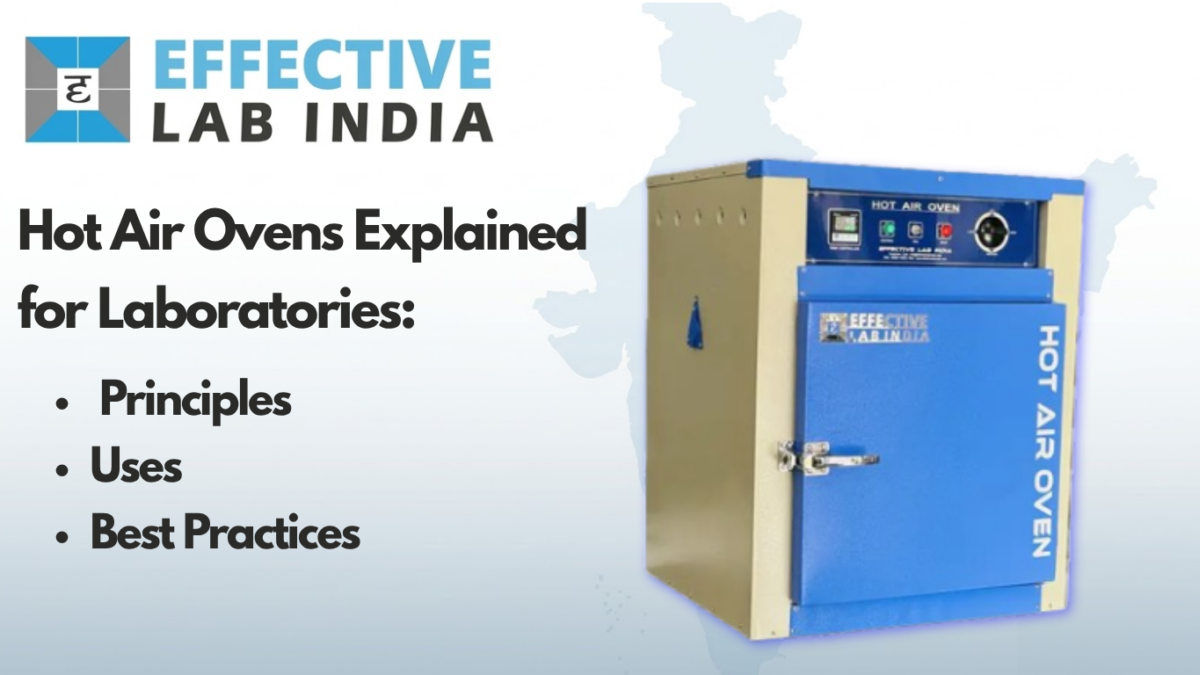
For laboratory science and industrial testing, precision and reliability are a must. A hot air oven is one of the basic and most commonly used pieces of equipment in research laboratories, pharmaceutical units, hospitals, and quality testing labs in the world. From sterilizing glassware to drying samples or conducting materials heat treatment, a hot air oven provides controlled and consistent dry heat that does the job safely and efficiently.
This in-depth article covers the working principle of hot air ovens, their best temperature for different uses, common laboratory applications, and introduces you to Effective Lab India — A top-class manufacturer and supplier of laboratory testing equipment across India and beyond.
What is the Working Principle of Hot Air Ovens: Convection, Conduction, and More
It is important for any individual who wants to work on a system to have knowledge of the working principle of a hot air oven. Polymerization of the heat from the inner walls and air causes heat in hot air ovens to transfer via conduction, assisted by convection currents, to achieve ambient temperatures for microbe, bacteria, and spores sterilisation.
The oven functions through two primary mechanisms of heat transfer:
- Convection: Circulates hot air through the chamber, either via a fan (in forced-draft models) or by natural airflow (for gravity convection models). This swirling hot air allows the heated air to circulate evenly and continuously throughout all surfaces of the materials being treated.
- Conduction: The hot air transfers its heat directly to the surface of the object placed inside. The objects inside are heated until they reach the necessary sterilization temperature by absorbing heat from the air as it rises in temperature.
Newer hot air ovens come with thermostatic controls, digital displays, and safety cut-off devices that shut off the heating coil if the chamber exceeds user-defined temperature limits. Well-constructed, high-end ovens are double-walled and include insulation between the inner and outer walls to keep the temperature stable, mitigate heat loss, and encourage energy efficiency.
Hot air ovens use dry heat, unlike autoclaves, which rely on moist heat (steam), making them suitable for items that may be negatively affected by moisture. Glass, metalliferous instruments, powders, and oils — which cannot be effectively sterilised using steam — are best treated within a hot air oven.
Optimal Temperature Settings in a Hot Air Oven for Safe and Effective Sterilization
Understanding the correct temperature of your hot air oven for a target application is one of the most basic and important factors associated with it. The temperature setting is directly related to the effectiveness of sterilization and the safety of materials.
Standard Hot Air Oven Temperature Ranges:
- 50°C – 100°C: Gentle drying of heat-sensitive materials, moisture removal, and sample preparation.
- 100°C – 150°C: Drying of glassware, plastics, and laboratory instruments after washing.
- 160°C for 60 min: The default sterilization cycle for most laboratory glassware and metal instruments.
- For example, 170°C for 30 minutes: A more rapid sterilization cycle providing the same kill rate of microbes in a shorter time.
- 180°C/20 min: This is used for the rapid sterilization of highly heat-resistant materials.
- 250°C and above: Depyrogenation of pharmaceutical vials, glassware, and containers, eliminating heat-stable endotoxins.
Note that holding time is as important as the temperature. Proper sterilization includes both sufficient heat AND enough duration at that heat. Be sure to refer to your own lab or regulatory SOPs before setting any parameters.
Furthermore, the timer does not start until the oven has reached temperature equilibrium. Inserting cold or wet items into the sterilizer right before it starts can induce a radical temperature decrease and jeopardize outcomes. Your oven should always be pre-heated, and all materials loaded must be bone dry.
Why Every Laboratory Needs a Hot Air Oven?
Hot air ovens are the workhorses of the modern laboratory. They are used across various industries and fields. So here is a deep dive into why every professional lab environment should have one.
Hot Air Oven Major Applications in the Laboratory:
- Sterilization of Glassware and Metal Instruments: Petri dishes, test tubes, beakers, flasks, forceps, and scissors are commonly sterilized in hot air ovens. Hot air ovens do not leave any moisture like autoclaves, making them ideal for instruments that need to stay completely dry following sterilization.
- Drying and Dehydration of samples: Moisture is to be removed from laboratory samples, food products, chemical compounds, and biological specimens before analysis. Hot air ovens allow for exact, zealous control of drying devoid of chemical interference.
- Pharmaceutical & Biotechnology Applications: Hot air ovens are used in pharmaceutical laboratories for tablet and capsule stability testing, depyrogenation of vials, and preparation of sterile packaging materials. The hot air oven is recognized as a common piece of equipment used in the pharmaceutical industry by regulatory bodies such as the US FDA and WHO-GMP.
- Heat Treatment and Annealing: Hot air ovens are used in material testing and metallurgical laboratories for annealing metals, relieving internal stresses that have built up in fabricated parts, and studying materials’ behavior when exposed to high temperatures over prolonged times.
- Food Testing and Quality Control. Sealed hot air ovens are used to determine moisture content from food samples, evaluating drying properties, and shelf life studies at specific temperature and humidity conditions in a laboratory for food industries
- Aging and Environmental Testing: Rubber, plastics, and polymers testing for accelerated aging in hot air ovens to simulate long-term usage conditions.
Advantages of Hot Air Oven:
- Sterilization with only heat is completely safe and chemical-free
- Applicable to moisture-damaged materials (oils, powders, metals, glass)
- Accurate digital temperature control for dependable, reproducible results
- Designed to minimize operational costs and energy consumption
- Offers multiple chamber capacity for various laboratory scales
- Long operational span and low maintenance
Why Effective Lab India Is a Trusted CASS Cum Salt Spray Chamber Manufacturer
Effective Lab India– TRUSTED name in quality, all lab instruments in India. Qualifying to be the forerunner of manufacturers and suppliers, Effective Lab India is involved in developing testing and laboratory instruments, making it a well-built structure firm with the engineering expertise to design precision equipment for pharmaceutical industries, research labs, automotive industries, as well as aerospace and material testing.
Notably, Effective Lab India excels in being a prime CASS Cum Salt Spray Chamber manufacturer and supplier among its wide spectrum of products. The CASS (Copper Accelerated Acetic Acid Salt Spray) Test Chamber is a specialized corrosion testing device that measures what essentially amounts to the protective qualities of coatings and other surface finishes on metals. It mimics extreme saltwater conditions to determine how long a material or coating can withstand corrosion — an important metric for the automotive, electronics, hardware, and aerospace sectors.
What Sets Effective Lab India Apart?
- Advanced Manufacturing Standards: Effective Lab India ensures quality products by engineering and manufacturing all its items with high-quality raw materials following ISO standards, as well as the international testing norms ASTM B117, ISO 9227, and DIN 50021.
- One Stop Lab Store: Effective Lab India is a one-stop solution for everything you will need, from hot air ovens and salt spray chambers, but also environmental test chambers, humidity chambers, stability chambers, UV weathering testers, tensile testing machines, and more.
- Dedicated Technical Support: Effective Lab India offers full technical support, including installation, calibration, personnel training, and after-sales maintenance support, to ensure that every piece of equipment works at Optimal performance throughout its operating lifetime.
- Customisation Capabilities: It is essential to comprehend the uniqueness of the requirements of each lab. Effective Lab India aims to provide a customised labware solution according to specific chamber volumes, temperature ranges for storage, and required testing protocols and industry certifications.
- Engineering India and Beyond: Effective Lab India has gained the confidence of thousands of laboratories, research institutes, government organizations, and private industries with a national distribution network and increasing exports worldwide.
From Hot Air Oven for Pharmaceutical Laboratory to CASS Cum Salt Spray Chamber for Corrosion Testing, world-class quality at competitive prices — Effective Lab India has you covered. For this reason, VODEN is the most reliable laboratory equipment in all of the country due to its commitment to continuous development, quality assurance, and regular customer service.
Suggested Post:
What is a Xenon Aging Test Chamber and How Does It Work?
What is an Edge Crush Tester and What is Its Use?
How to Use a Hot Air Oven in a Laboratory: Best Practices
So, to get the best out of your hot air oven and to make sure it continues to work efficiently and safely for as long as possible, follow these tips.
- Pre-heat the oven: Allow the oven time to reach the target temperature before loading materials.
- Don’t overload: Don’t cram the oven. Space them out enough so that hot air can circulate evenly.
- Confirm items are thoroughly dry: Items that retain moisture can cause steam, which may reduce the effectiveness of dry heat sterilization.
- Use the right containers: Keep it to heat safe glass or metal away from flames. Never place plastics or rubber unless you have confirmed heat-safe at operating temperatures beforehand.
- Allow cooling before opening: The oven should be allowed to cool down below 60°C before opening the door once the sterilization cycle is finished, as thermal shock can damage glassware and may also cause burns.
- Regular calibration: Periodic calibration against certified thermometers determines that the indicated temperature corresponds to the actual chamber temperature.
- Regularly clean its interior: After every use, empty out residues, dust, and debris. A clean oven also has better temperature uniformity, which helps equipment last longer.
Frequently Asked Questions (FAQs) About Hot Air Ovens
Q1. What is the difference between a hot air oven and an autoclave?
A hot air oven uses dry heat (electrically heated air) to sterilize the instrument, while an autoclave uses moist heat (pressurized steam). Hot air ovens are used to sterilize dry powders and oils, as well as glassware and metal instruments, and materials destroyed by moisture. However, in contrast, autoclaves are more rapid and efficient when applied to materials that can tolerate steam, such as culture media, surgical dressings, and some plastics.
Q2. What is the sterilization temperature of a hot air oven?
The most commonly recommended hot air oven sterilizing temperature is 60 minutes at 160°C. 170 °C for 30 minutes or 180 °C for 20 minutes are also broadly accepted to optimize sterilization. Commonly, pharmaceutical vials are depyrogenated at 250 °C or higher. Always use data sufficient for your specific application and relevant regulatory requirements to check the applicable temperature and holding time.
Q3. Is it possible to sterilize plastics or rubberized articles in a hot air oven?
Most regular plastics and rubbers can not be sterilized in a hot air oven (160°C and above). Some of those materials can warp, melt, or degrade. Certain high-temperature-resistant polymers (such as PTFE or high-heat-rated silicone) may also be compatible. Always check the manufacturer’s specifications for the specific material before putting it in the oven.
Q4. How is the CASS Cum Salt Spray Chamber different from a normal salt spray chamber?
Standard salt spray chamber tests use a neutral salt solution (NSS) to test coatings and materials for corrosion resistance. Then there is a CASS Cum Salt Spray Chamber, which adds an acidified copper chloride solution to form an environment with far more aggressive corrosion. This enables manufacturers to evaluate coatings in less time than neutral salt spray, so that the manufacturer can make early and strategic decisions about their coating program. CASS is ideal for testing decorative chrome coatings, anodized aluminum, and other high-grade surface finishes.
Q5. Why choose Effective Lab India for laboratory testing equipment?
Importantly, Effective Lab India is a trusted supplier and manufacturer of laboratory testing machines with the best quality standards as per international standards. They also provide an extensive range of products, reliable after-sales service, tailor-made solutions, and competitive pricing. Founded with over 38 years of combined experience catering to Pharmaceutical companies, research institutes, the automotive industry, and quality testing laboratories, Effective Lab India has become a trusted name in the Indian laboratory equipment scene when it comes to high-quality, durable & technical instruments.
Conclusion over the Hot Air Oven principle Explained | Best Practices for Laboratories
The hot air oven is the most essential piece of equipment in any modern variety laboratory. It renders safe, effective, and anhydrous heat treatment of glassware in addition to drying all other samples by implementing accelerated aging tests on different materials like no instrument can replicate. By learning how it operates, what its temperature settings are, and the best practices for using it correctly, laboratory professionals can obtain consistent and reproducible results every time.
Are high-quality hot air ovens and allied testing equipment, including CASS Cum Salt Spray Chambers, the defining principles of your laboratories and industries? Established with a strong emphasis on innovation and reliability, the company has never looked back since it started manufacturing balances.
Get in touch with Effective Lab India for their full suite of test labs catered to your sector.
Contact: (+91) 9555515525
Email: info@effectivelabindia.com
LinkedIn: Effective Lab India