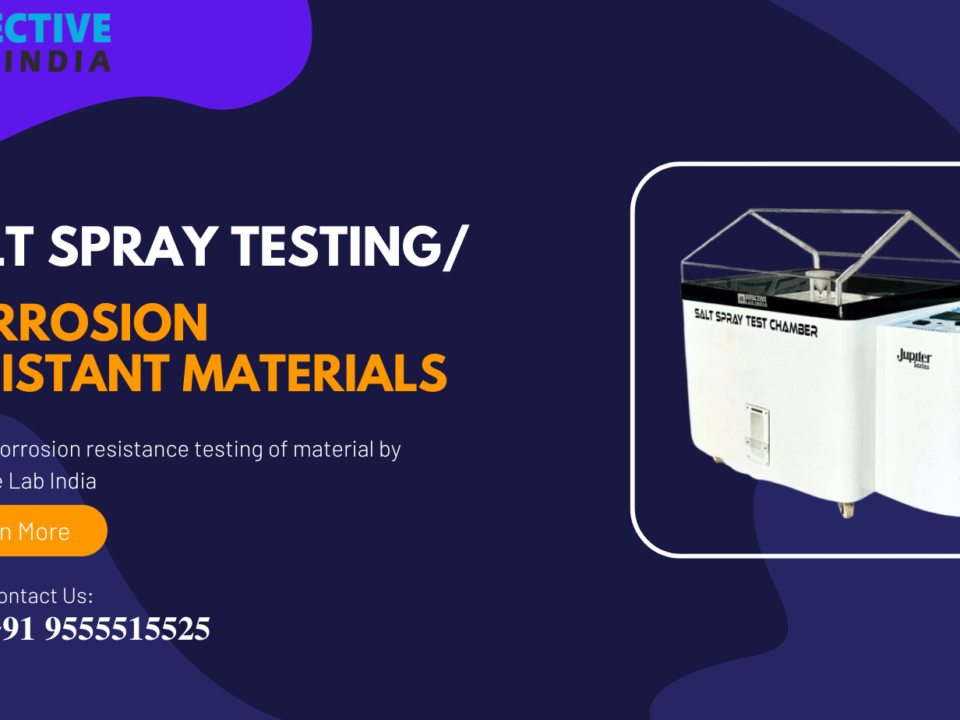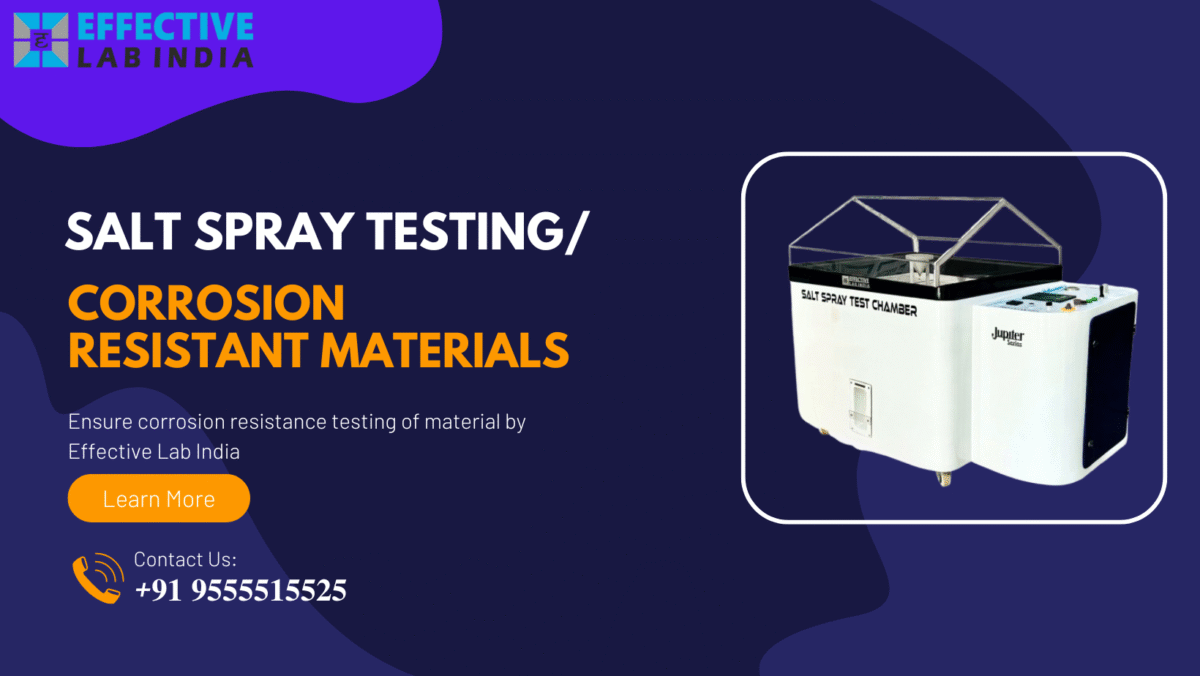

Salt Spray Test Chamber Manufacturers: Quality, Price, and Performance
June 11, 2026
Salt Spray Test Procedure According to ASTM B117 Standards
June 19, 2026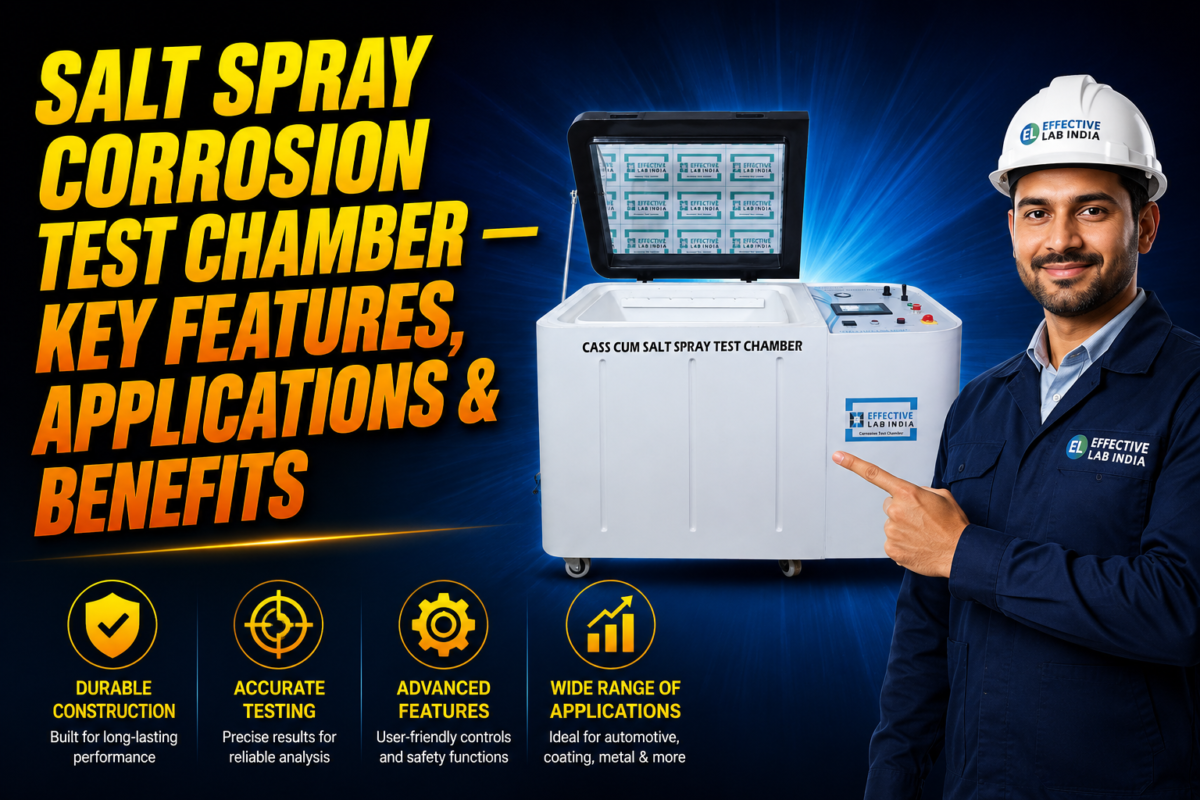
Salt Spray Corrosion Test Chamber: Corrosion is one of the most damaging and costly threats to industrial materials, coatings, and finished products. Whether it is a car body panel exposed to road salt, a steel construction beam facing coastal humidity, or an aerospace fastener enduring altitude changes, corrosion silently degrades performance and safety over time.
A Salt Spray Corrosion Test Chamber is a laboratory instrument specifically designed to simulate and accelerate those corrosive conditions. By recreating a high-salinity, mist-filled environment inside a controlled enclosure, engineers and quality teams can evaluate how long a material or surface coating will resist corrosion — in hours or days instead of months or years in the field.
At Effective Lab India, we manufacture and supply precision Salt Spray Test Chambers built to meet the most demanding quality standards across automotive, aerospace, electronics, marine, construction, and defense industries. Our chambers comply with internationally recognised standards including ASTM B117 and ISO 9227, making them the first choice for quality control labs across India and global export markets.
What Is Salt Spray Testing?
Salt spray testing — also called salt fog testing — is a standardised accelerated corrosion test method. During the test, material samples or coated components are placed inside an enclosed chamber where a fine mist of sodium chloride (NaCl) solution, typically at 5% concentration, is continuously sprayed at a controlled temperature of 35°C (95°F).
The test runs for a defined period ranging from a few hours to several weeks, depending on the material type, coating thickness, and the standard being followed. After the test cycle, samples are visually and physically evaluated for signs of corrosion such as:
- Rust formation
- Blistering or peeling of coatings
- Pitting on metal surfaces
- Colour changes or discolouration
- Loss of adhesion in paint or plating
This method allows manufacturers to predict the long-term durability of a product in corrosive environments and make informed decisions about material selection and surface treatment before a product ever reaches the market.
Working Principle of the Salt Spray Corrosion Test Chamber
The working principle of a Salt Spray Corrosion Test Chamber is straightforward yet highly precise. Here is a step-by-step overview:
- Salt Solution Preparation: A 5% NaCl (sodium chloride) solution is prepared and loaded into the chamber’s reservoir. For specific tests, the concentration may vary.
- Temperature Control: The chamber is brought to the required operating temperature, typically 35°C, using built-in heating elements and a PID temperature controller.
- Atomisation of Salt Solution: Compressed air at controlled pressure passes through an atomiser nozzle, converting the salt solution into a fine, uniform mist (fog) that fills the chamber.
- Sample Exposure: Test specimens — metal sheets, coated panels, fasteners, or finished components — are placed on specimen racks inside the chamber at a specified angle, ensuring complete and uniform exposure.
- Test Duration: The test runs continuously for the required number of hours. Operators can monitor and record parameters throughout via the digital control panel.
- Evaluation: After the test, samples are removed, rinsed, and inspected for corrosion or coating degradation as per applicable standards.
This systematic process simulates years of real-world environmental exposure in a reproducible, controlled laboratory setting.
Key Features of Effective Lab India Salt Spray Corrosion Test Chamber
Effective Lab India’s Salt Spray Test Chambers are engineered for reliability, accuracy, and ease of use. Below are the standout features that set our equipment apart:
Corrosion-Resistant Chamber Body
The chamber is constructed from high-quality fibreglass reinforced plastic (FRP) or PVC material, which is inherently resistant to the corrosive salt fog environment inside. This ensures the chamber maintains its structural integrity and dimensional accuracy over many years of continuous use.
Digital Touchscreen Control Panel
A user-friendly digital touchscreen interface allows operators to programme test parameters including temperature, fog cycle timing, and test duration. The interface supports data logging for record-keeping and audit compliance.
Precision Temperature Control
PID-based temperature controllers maintain the chamber temperature at the set point (typically 35°C ± 1°C) throughout the test. The heated saturator ensures the salt solution is at the correct temperature before atomisation, preventing condensation inconsistencies.
Uniform Fog Distribution
The atomiser nozzle system is positioned to deliver even, consistent coverage of the test area. Fog collection funnels monitor fog concentration at regular intervals to verify uniformity throughout the test.
Heated Brine Reservoir
The built-in heated reservoir keeps the salt solution at the required temperature, ensuring consistent spray conditions and preventing salt crystallisation in the atomiser.
Safety Features
The chamber includes pressure relief valves, a low-water level alarm, and a lid interlock system to protect operators and equipment during testing. The exhaust system safely vents residual salt fog away from the lab environment.
Compliance with International Standards
Effective Lab India Salt Spray Chambers are designed and verified to operate in accordance with:
- ASTM B117 — Standard Practice for Operating Salt Spray (Fog) Apparatus
- ISO 9227 — Corrosion Tests in Artificial Atmospheres
- JIS Z 2371 — Japanese Industrial Standard for Salt Spray Testing
Benefits of Using a Salt Spray Corrosion Test Chamber
Investing in a Salt Spray Corrosion Test Chamber delivers measurable advantages for manufacturers, R&D teams, and quality control laboratories:
Accelerated Testing: Simulates months or years of outdoor exposure in days, significantly shortening product development and validation cycles.
Reliable Quality Control: Provides consistent, repeatable test results that manufacturers can use to validate materials and coatings before release to market.
Early Detection of Weak Points: Identifies vulnerabilities in coatings, platings, or base materials early in the development process, saving expensive rework costs downstream.
Regulatory Compliance: Helps companies meet international quality and safety standards required by customers, regulators, and certification bodies.
Cost-Effective Testing: Reduces the time and cost associated with long-term outdoor field exposure tests by delivering equivalent data in a controlled lab setting.
Improved Product Durability: Enables engineers to select the best materials and surface treatments, resulting in longer-lasting, more reliable products that build brand reputation.
Industry Applications of Salt Spray Corrosion Test Chambers
The Salt Spray Corrosion Test Chamber is used across a wide range of industries where corrosion resistance is critical to safety, performance, and regulatory compliance.
Automotive Industry
Automotive body panels, exhaust systems, fasteners, suspension parts, and protective coatings are routinely tested using salt spray methods. With vehicles exposed to road salt, moisture, and varying temperatures, manufacturers rely on salt spray data to select materials and coatings that meet multi-year durability targets.
Aerospace Industry
Aircraft components including aluminium alloy structures, titanium fasteners, and protective coatings must withstand extreme environmental conditions at high altitudes. Salt spray testing helps aerospace engineers verify coating integrity and predict service life with confidence.
Electronics and Electrical Equipment
Electronic enclosures, printed circuit boards (PCBs), connectors, and terminal blocks are vulnerable to corrosion in humid and saline environments. Salt spray testing ensures these components maintain electrical continuity and structural integrity over their operating lifetime.
Marine Industry
Ship hulls, offshore platforms, marine hardware, and anti-fouling coatings are continuously exposed to seawater and salt-laden air. Salt spray testing validates that materials and coatings can withstand this aggressive environment, reducing maintenance costs and improving safety.
Metal Finishing and Coating Industry
Galvanising, anodising, powder coating, and electroplating service providers use salt spray testing to verify the thickness, adhesion, and protective quality of surface treatments before delivery to clients.
Construction Industry
Structural steel, rebar, metal frames, and architectural hardware used in coastal or high-humidity environments must resist long-term corrosion. Salt spray testing helps construction material manufacturers demonstrate compliance with durability specifications.
Consumer Goods Manufacturing
Outdoor tools, kitchen appliances, hardware items, and sporting goods are tested to ensure they withstand moisture and saline conditions during everyday use, supporting product warranty claims and consumer safety.
Military and Defense
Defense equipment — vehicles, weapons, communication systems, and field hardware — faces some of the harshest environmental conditions in the world. Salt spray testing is a mandatory quality step for ensuring operational readiness and compliance with defense procurement standards.
Paints and Coatings Development
Research and development teams in the coatings industry use salt spray chambers to benchmark new formulations against existing products, accelerating innovation while maintaining quality standards.
Why Choose Effective Lab India?
Effective Lab India is a leading manufacturer and exporter of laboratory testing instruments based in Faridabad, Haryana, India. With years of experience in designing and building precision testing equipment, we have earned the trust of quality control teams across India and international markets.
Our Salt Spray Corrosion Test Chambers are built to last, easy to operate, and supported by a dedicated service team. We offer chambers in multiple capacity configurations to suit small R&D labs, mid-sized quality departments, and large-scale production testing environments. Every unit is calibrated and tested before dispatch to ensure it performs to specification from day one.
If you are looking for a reliable salt spray test chamber manufacturer in India, Effective Lab India is your trusted partner. Contact us today at +91 9555515525 or email info@effectivelabindia.com to discuss your testing requirements and get a quote tailored to your budget.
Frequently Asked Questions (FAQs)
Q1. What is the standard salt concentration used in a salt spray corrosion test?
The most widely used concentration is a 5% sodium chloride (NaCl) solution prepared with distilled or deionised water. This is specified in the key international standards ASTM B117 and ISO 9227. The solution is atomised inside the chamber at a controlled temperature of 35°C to create a uniform corrosive mist around the test specimens. Some specialised tests, such as the CASS (Copper-Accelerated Acetic Acid Salt Spray) test, use modified solutions with additional chemical additives to simulate even more aggressive conditions.
Q2. How long does a salt spray corrosion test typically take?
Test duration varies widely depending on the material type, coating system, and the standard or specification being followed. Common durations range from 24 hours for thin or decorative coatings up to 1,000 hours or more for heavy-duty protective coatings used in marine or industrial applications. For example, zinc-plated fasteners are typically tested for 96–240 hours, while hot-dip galvanised steel parts may be tested for 500–1,000 hours. The test duration required for your product will be defined by the applicable industry standard or customer specification.
Q3. What is the difference between ASTM B117 and ISO 9227 salt spray standards?
Both ASTM B117 and ISO 9227 are internationally recognised standards for salt spray testing and are broadly similar in their test methodology and requirements. ASTM B117 is published by ASTM International and is widely used in North America, while ISO 9227 is published by the International Organization for Standardization and is commonly specified in European and global standards. The primary difference lies in some details around acceptable test parameters, fog collection rates, and evaluation criteria. Many testing laboratories and quality systems operate in compliance with both standards simultaneously. When purchasing a Salt Spray Test Chamber, it is important to confirm that the equipment meets the specific standard required by your customers or certification body.
Recent Post:
Xenon Test Chamber Applications in the Automotive Industries
Environmental Test Chambers: Salt Spray Chamber, Ozone Test Chamber & Xenon Arc Test Chamber
Effective Lab India — Plot No. 65, Jeevan Nagar Part-2, Faridabad – 121005, Haryana, India
Contact: +91 93554 43334
Email: info@effectivelabindia.com
LinkedIn: Effective Lab India