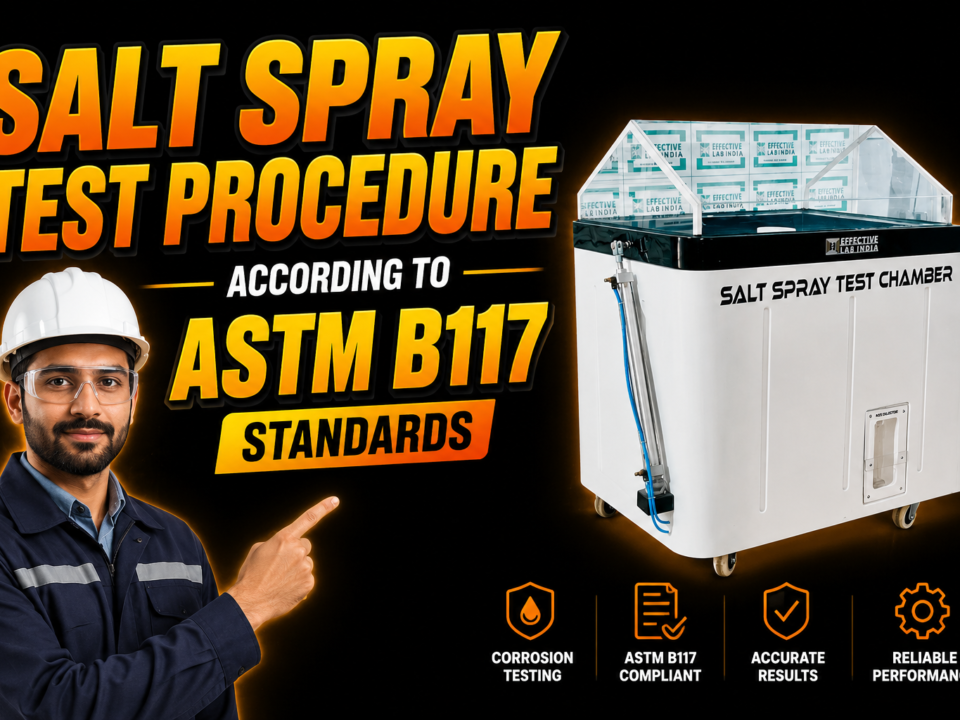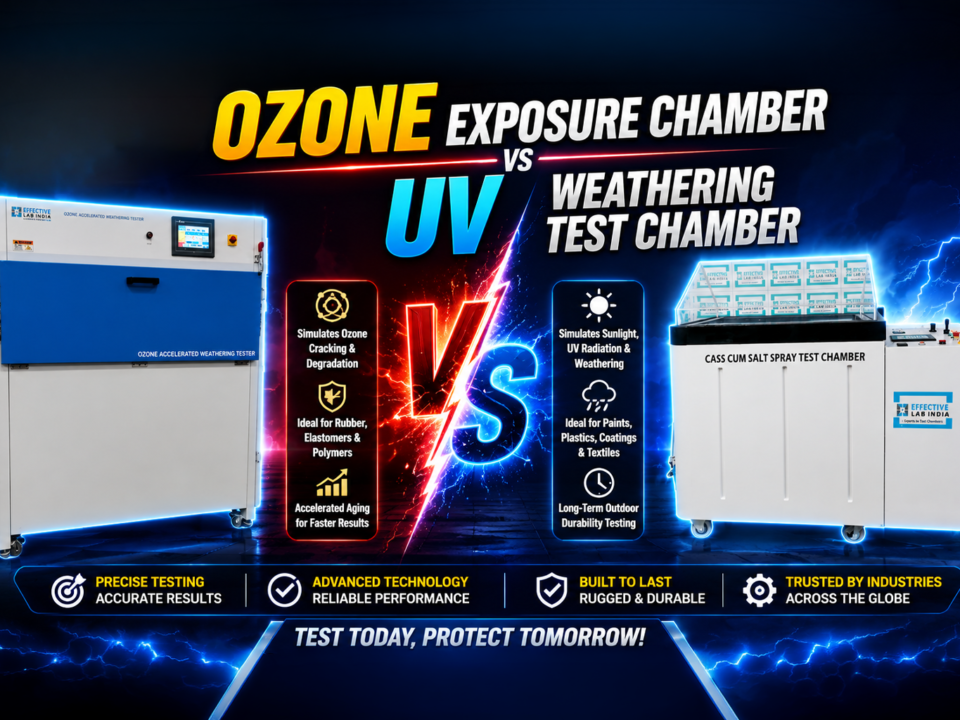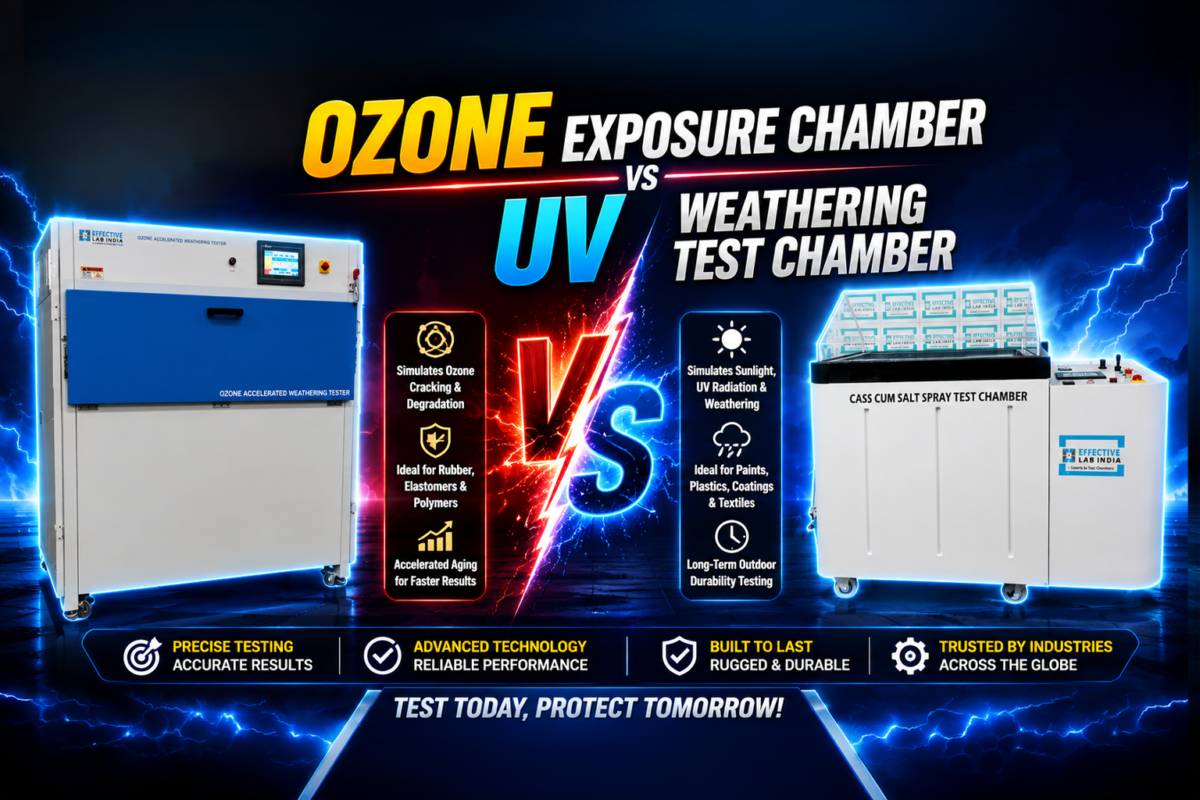

Xenon Test Chamber Applications in the Automotive Industries
June 8, 2026
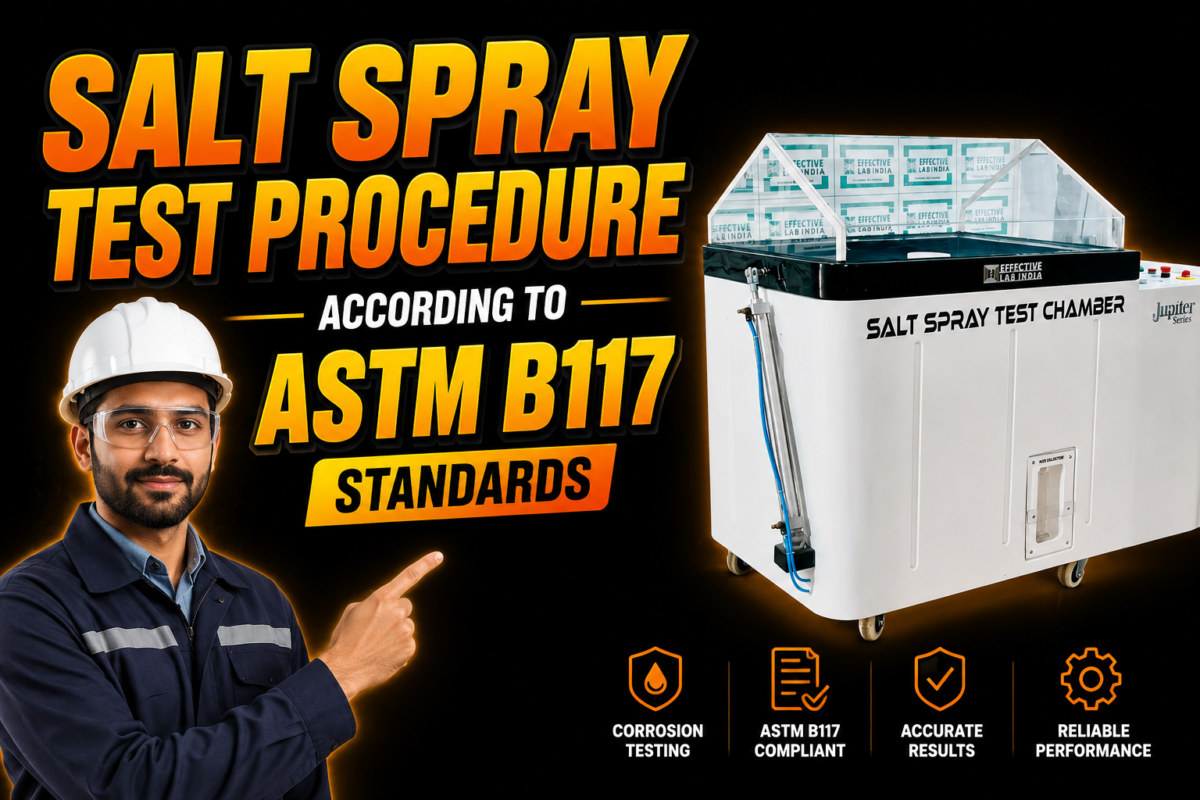
Salt Spray Corrosion Test Chamber — Key Features, Applications & Benefits
June 12, 2026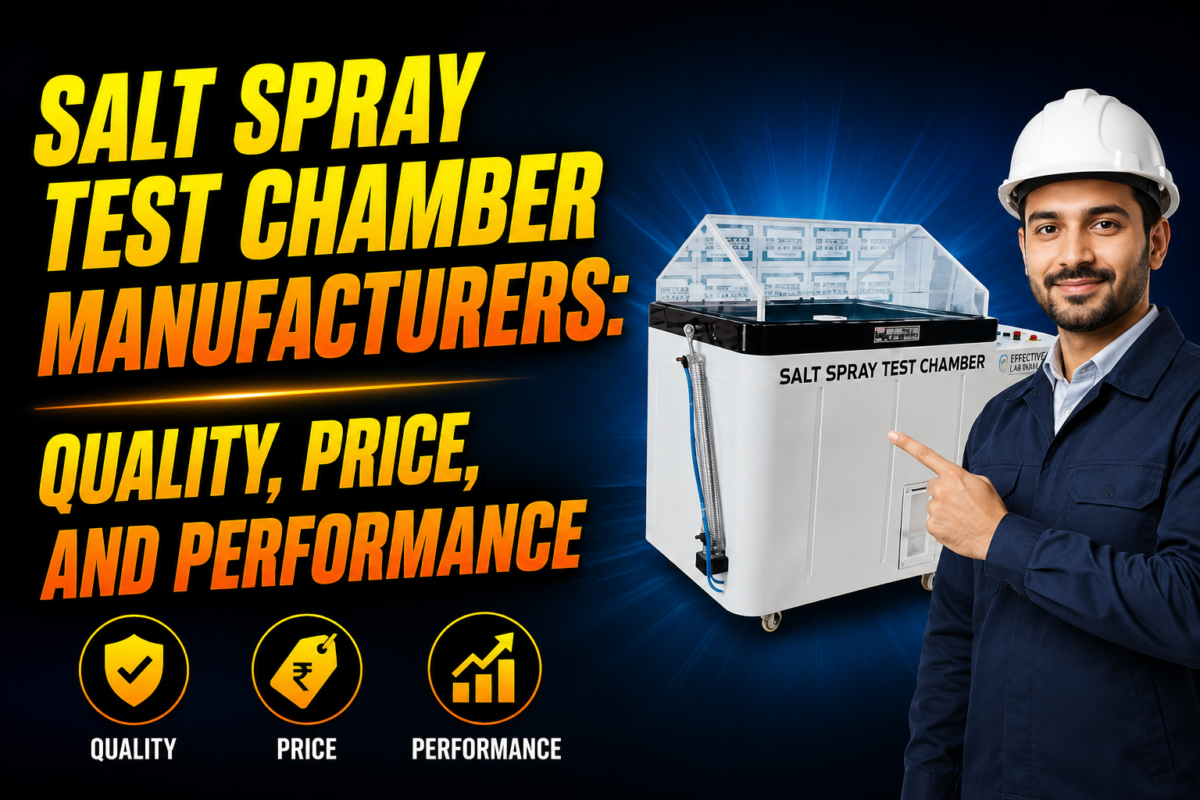
Salt Spray Test Chamber Manufacturers: When it comes to evaluating the corrosion resistance of materials, coatings, and finished products, one instrument stands out above the rest: the salt spray test chamber. Industries ranging from automotive and aerospace to electronics and construction rely on this critical testing equipment to ensure that their products can withstand the harshest environmental conditions. Choosing the right salt spray test chamber manufacturers, therefore, is not just a purchasing decision — it is a strategic investment in product quality, regulatory compliance, and long-term brand reputation.
This guide explores everything you need to know about salt spray test chambers, the standards they must meet, the features that separate good manufacturers from great ones, and why Effective Lab India has earned its position among the most trusted names in corrosion testing equipment.
What is a Salt Spray Test Chamber and Why is it Important?
A salt spray test chamber, also known as a salt fog test chamber or corrosion test chamber, is a controlled laboratory device designed to simulate the corrosive effects of saltwater environments on materials and surface coatings. The chamber creates a fine, continuous mist of saline solution — typically a 5% sodium chloride solution — at a regulated temperature and pressure. Test specimens are placed inside the chamber and exposed to this environment for a defined period, which can range from a few hours to thousands of hours depending on the application.
The importance of salt spray testing cannot be overstated. Corrosion is one of the most destructive forces affecting metal components, coated surfaces, and electronic assemblies worldwide. It leads to structural failures, increased maintenance costs, product recalls, and safety hazards. By simulating years of real-world corrosive exposure in a matter of days or weeks, salt spray testing allows manufacturers to identify weaknesses early — before products reach the market or the field.
Salt spray testing is widely used to assess the performance of paints, lacquers, electroplated coatings, anodized surfaces, powder coatings, and conversion coatings. It is a standard requirement for suppliers to automotive OEMs, military procurement agencies, marine equipment manufacturers, and consumer electronics brands globally. Without validated corrosion resistance data, products cannot pass the certification and compliance gates that modern supply chains demand.
Essential Features Offered by Reliable Salt Spray Test Chamber Manufacturers
Not all salt spray test chambers are created equal. The quality, durability, and precision of the instrument depend heavily on the manufacturer’s design philosophy and manufacturing standards. Here are the essential features that distinguish reliable salt spray test chamber manufacturers from the rest.
Robust Chamber Construction: The chamber body must be fabricated from high-quality, corrosion-resistant materials such as fiber-reinforced plastic (FRP) or premium-grade PVC. The interior surface must resist the aggressive saline atmosphere without degrading over time, which would contaminate test results and reduce equipment lifespan.
Precise Temperature Control: Salt spray testing standards require the chamber interior to be maintained at a specific temperature — typically 35°C ± 2°C for standard ASTM B117 testing. Reliable manufacturers integrate high-accuracy digital temperature controllers with PT100 sensors and redundant safety cutoffs to ensure consistent thermal conditions throughout long test runs.
Uniform Fog Distribution: One of the most critical performance parameters is how evenly the salt fog is distributed across the test zone. Premium manufacturers design their spray nozzles and air saturation towers with precision engineering to eliminate hot spots, dead zones, or uneven fog density. Uniform fog distribution ensures that all specimens receive equivalent exposure, making test results reproducible and defensible.
pH and Salt Solution Concentration Monitoring: The concentration and pH of the salt solution directly affect the aggressiveness and repeatability of the test. Leading manufacturers include built-in solution monitoring capabilities and recommend or supply calibrated pH meters and conductivity instruments as part of their testing packages.
User-Friendly Control Panel: Modern salt spray chambers come with intuitive digital control panels, programmable test cycles, data logging capabilities, and alarm systems. Some advanced models offer touchscreen interfaces with USB or Ethernet connectivity for remote monitoring and data export, which is valuable for quality management systems compliant with ISO 17025 laboratory requirements.
After-Sales Support and Calibration Services: A manufacturer’s commitment does not end at delivery. Reliable salt spray test chamber manufacturers offer comprehensive installation support, operator training, preventive maintenance contracts, and NABL-traceable calibration certificates to keep the equipment performing to specification throughout its service life.
Understanding ASTM Standard Salt Spray Chamber Requirements
Salt spray testing is governed by internationally recognized standards that define the exact conditions under which tests must be conducted. For manufacturers and quality managers, understanding these standards is essential to procuring the right equipment and generating test results that are accepted by customers, regulators, and certification bodies worldwide.
The primary requirements that an ASTM standard salt spray chamber must meet include chamber volume, fog collection rate, salt solution concentration, operating temperature, and specimen positioning. The standard specifies that the fog collected over any 80 cm² horizontal collection area within the exposure zone must accumulate at a rate of 1 to 2 mL per hour on average over a minimum 16-hour collection period. The sodium chloride concentration of the collected solution must fall between 4% and 6% by weight, and the pH must be between 6.5 and 7.2 when measured at 25°C.
These specifications demand precision engineering throughout the chamber — from the air saturation tower and spray nozzle assembly to the temperature control system and drainage design. Non-compliant chambers produce test data that cannot be used for regulatory submissions, customer qualification tests, or internal quality benchmarks. This is why sourcing from manufacturers who design specifically to ASTM standards is so important.
Suggested post:
Leading Laboratory Equipment Suppliers Offering Advanced Testing Solutions
Universal Testing Machine (UTM): Features, Specification & Price
ASTM B117 Standard: The Global Benchmark for Salt Spray Testing
Among the various international standards for salt spray testing, ASTM B117 stands as the most widely referenced and globally accepted benchmark. Originally developed by ASTM International (formerly the American Society for Testing and Materials), ASTM B117 is the standard practice for operating salt spray (fog) apparatus and is cited in product specifications and procurement contracts across nearly every major industry.
ASTM B117 defines the operational requirements for salt spray test chambers in precise detail. It specifies that the test cabinet must maintain a temperature of 35°C ± 2°C in the exposure zone. The spray nozzle must produce a fine, wet, dense fog with a droplet size that ensures uniform coverage. The air supply must be pre-humidified before entering the spray tower to prevent solution evaporation at the nozzle tip. The chamber must be constructed from materials that do not affect the corrosiveness of the fog.
Importantly, ASTM B117 does not define pass or fail criteria for specific materials — it only standardizes the test conditions. Pass/fail requirements are defined in product-specific standards or customer specifications that reference ASTM B117 as the test method. This means that the quality of the test chamber itself is the foundation of the entire testing program; if the chamber does not reliably deliver ASTM B117-compliant conditions, no downstream interpretation of results has any scientific validity.
Many other standards reference or are derived from ASTM B117, including ISO 9227 (used in European markets), JIS Z 2371 (Japan), and DIN 50021 (Germany). Chambers designed to fully comply with ASTM B117 generally also satisfy the requirements of these related standards, making them suitable for global supply chains and multi-market qualification programs.
Why Effective Lab India is Among the Best Salt Spray Chamber Manufacturers in India
Effective Lab India has established itself as a leading name among salt spray chamber manufacturers in India through a consistent focus on engineering precision, materials quality, and customer-centric service. With years of experience serving industries including automotive, aerospace, marine, electronics, and construction, the company has developed deep domain knowledge that translates directly into superior product design.
Effective Lab India’s salt spray test chambers are engineered to meet ASTM B117, ISO 9227, JIS Z 2371, and other major corrosion testing standards. The chambers feature all-FRP construction with acid-resistant interiors, precision-engineered atomizing nozzles, and high-accuracy digital temperature controllers that maintain test conditions within tight tolerances. The result is reliable, reproducible corrosion test data that customers can use with confidence in qualification submissions and quality audits.
The company offers a range of chamber sizes to suit different testing volumes, from compact bench-top models suitable for small laboratories to large walk-in configurations for industrial testing programs. This flexibility allows customers across diverse sectors to find a solution that matches their exact throughput and specimen size requirements without over-investing in capacity they do not need.
Effective Lab India also stands out for its transparent pricing model. The company provides detailed quotations that break down the cost of the chamber, accessories, installation, calibration, and after-sales service contracts, allowing buyers to make fully informed comparisons. Their competitive pricing, combined with the quality of their construction and the depth of their technical support, makes them a compelling choice for both first-time buyers and organizations upgrading legacy equipment.
Experience Superior Quality and Performance with Effective Lab India’s Salt Spray Chambers
Choosing Effective Lab India means choosing a partner that is as committed to your testing outcomes as you are. The company’s salt spray chambers are designed not just to meet standards, but to exceed customer expectations in terms of reliability, ease of use, and total cost of ownership.
Every chamber undergoes rigorous factory acceptance testing before dispatch, with calibration records provided to ensure full traceability. Installation and commissioning are performed by trained engineers who verify that the equipment meets all performance parameters on-site at the customer’s facility. Comprehensive operator training ensures that your team can run tests confidently and interpret results correctly from day one.
Long-term support is a cornerstone of the Effective Lab India customer relationship. Preventive maintenance visits, spare parts availability, and NABL-traceable recalibration services ensure that your investment continues to deliver accurate, standard-compliant results year after year. When you choose Effective Lab India’s salt spray test chambers, you are not buying a piece of equipment — you are acquiring a testing capability backed by expertise, service, and accountability.
Frequently Asked Questions (FAQs)
Q1: What is the difference between ASTM B117 and ISO 9227 salt spray testing standards?
ASTM B117 and ISO 9227 are both widely used standards for salt spray testing, and they share the same fundamental test conditions — a 5% sodium chloride solution, a chamber temperature of 35°C, and a fog collection rate of 1–2 mL per 80 cm² per hour. The primary differences lie in certain details of specimen positioning, fog collection measurement procedures, and reporting requirements. ISO 9227 is the preferred standard in European markets and is referenced in many automotive and industrial specifications there, while ASTM B117 dominates in North American and global contexts. Chambers built to comply with one standard generally satisfy the other, but you should verify with your manufacturer that their equipment explicitly meets both if you need to serve multiple markets.
Q2: How do I determine the right chamber size for my testing needs?
Chamber size selection depends on three main factors: the size of the specimens you will test, the number of specimens you need to run simultaneously, and the throughput required by your quality program. Manufacturers like Effective Lab India offer chambers in a range of volumes — typically from around 60 liters for small-scale testing to 1,000 liters or more for industrial programs. As a general rule, you should select a chamber that provides enough usable floor area and specimen rack space to accommodate your largest test panels or assemblies with adequate spacing between specimens to ensure uniform fog exposure. Consulting with the manufacturer’s application engineers before purchase is strongly recommended to avoid under- or over-specification.
Q3: How often does a salt spray test chamber need to be calibrated?
Calibration frequency depends on the intensity of use, the requirements of your quality management system, and any customer or regulatory mandates that apply to your testing program. Most quality standards and laboratory accreditation bodies recommend calibrating salt spray chambers at least once per year under normal use conditions. However, chambers that run continuously or are used for qualification testing submitted to external customers or regulatory agencies may require more frequent calibration — typically every six months. In addition, a calibration check should always be performed after any maintenance event that could affect chamber performance, such as nozzle replacement, temperature sensor servicing, or repairs to the chamber body. Effective Lab India provides NABL-traceable calibration services to ensure your equipment remains compliant with all applicable standards.
Recent Post:
Xenon Test Chamber Applications in the Automotive Industries
Environmental Test Chambers: Salt Spray Chamber, Ozone Test Chamber & Xenon Arc Test Chamber
For More Information, please reach out to us.
Contact: +91 93554 43334
Email: info@effectivelabindia.com
LinkedIn: Effective Lab India