Salt Spray Corrosion Test Chamber — Key Features, Applications & Benefits
June 12, 2026
How Does a Tensile Testing Machine Determine the Breaking Point of a Material?
July 31, 2026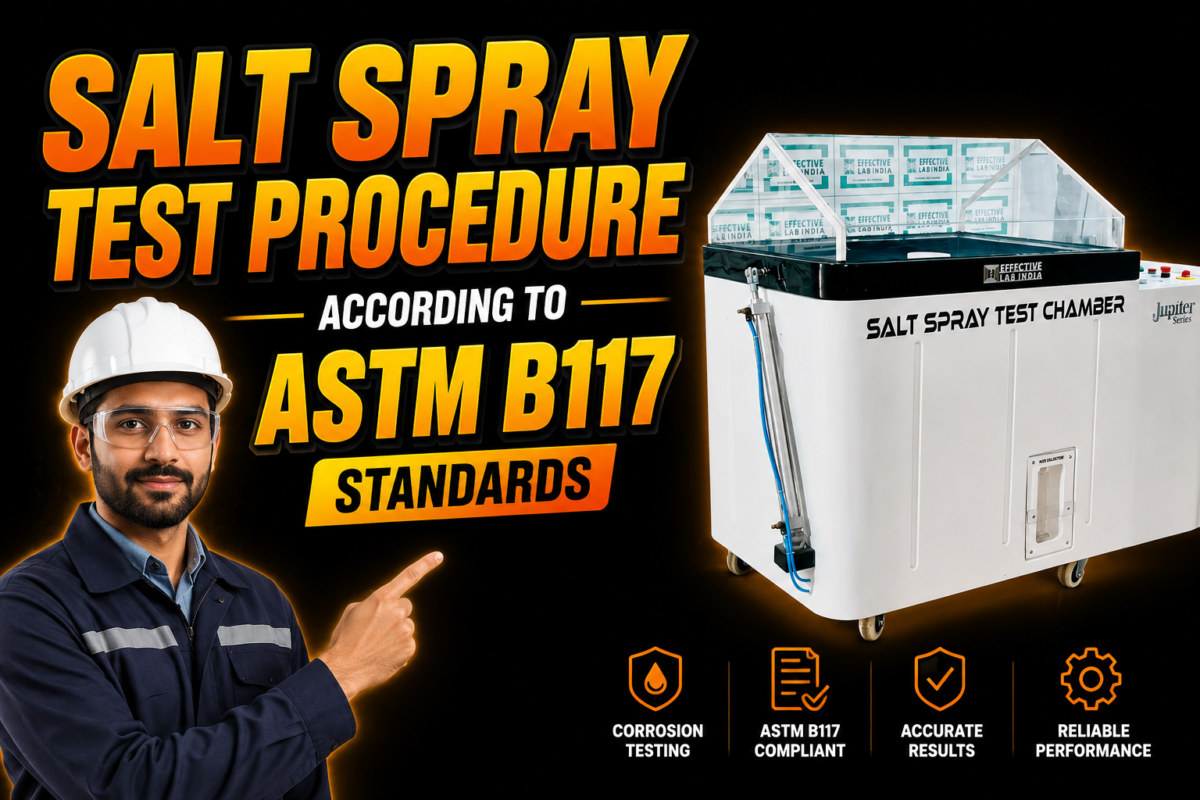
Salt Spray Test: Corrosion is a universal threat to manufactured metal products, coatings, and surface-treated components. Across automotive, aerospace, electronics, construction, marine, and industrial sectors, the economic cost of uncontrolled corrosion runs into hundreds of billions of dollars annually — manifesting as premature coating failures, structural degradation, product recalls, and costly warranty claims. For quality engineers, materials scientists, and manufacturing quality managers, the ability to accurately predict and validate the corrosion resistance of products and materials before they reach the field is a fundamental professional responsibility.
The salt spray test — also known as the salt fog test — is the world’s most widely applied accelerated corrosion test method. Standardized under ASTM B117 in the United States and ISO 9227 internationally, the salt spray test provides a controlled, reproducible laboratory environment for evaluating corrosion resistance that has been used across global manufacturing supply chains for over eight decades. Understanding the correct salt spray test procedure — including specimen preparation, chamber setup, test conditions, duration, and result evaluation — is essential for generating valid, comparable, and commercially defensible test data.
At Effective Lab India — a precision instrument manufacturer producing Salt Spray Chambers, Cyclic Corrosion Chambers, CASS CUM Salt Spray Chambers, Ozone Test Chambers, Universal Testing Machines, and a comprehensive range of industrial lab equipment — we bring deep manufacturing and application expertise to this complete procedural guide. Whether you are setting up a new salt spray test facility, training quality laboratory personnel, or reviewing your existing test procedures for standard compliance, this guide provides the authoritative, step-by-step technical reference you need.
What Is a Salt Spray Test and Why Is It Important?
Definition and Purpose
A salt spray test is an accelerated laboratory corrosion test method that exposes material specimens, coated panels, plated components, or assembled parts to a continuous, controlled fog of salt water solution — typically 5% sodium chloride (NaCl) — in a sealed, temperature-regulated chamber. The test replicates, in a compressed timeframe, the corrosive effects of salt-laden marine, coastal, and de-icing salt environments that products encounter during their operational service life. By significantly accelerating the corrosion process through elevated salt concentration, controlled temperature, and continuous exposure, the salt spray test enables quality engineers to evaluate corrosion performance in hours or days rather than months or years of outdoor exposure.
The salt spray test is not designed to perfectly replicate any specific outdoor environment — its primary value is as a comparative and quality control tool. It provides a consistent, repeatable test condition that allows manufacturers to compare the corrosion resistance of different materials, coating systems, surface treatments, and plating specifications side by side, under identical test conditions, generating directly comparable results that drive informed quality decisions.
Why the Salt Spray Test Is Essential for Quality Control
- Coating Quality Verification: Detects pinholes, thin spots, adhesion failures, and porosity defects in paint, powder coat, electroplating, and conversion coating systems before products reach customers.
- Supplier Qualification: Provides an objective, standardized corrosion resistance baseline for qualifying and monitoring coating and surface treatment suppliers across the supply chain.
- Incoming Material Acceptance: Validates that incoming batches of coated or plated components meet the corrosion resistance specification before release to production.
- Product Development Support: Enables rapid comparative evaluation of alternative coating formulations, surface treatment processes, and substrate materials during new product development.
- Regulatory and Customer Compliance: Generates the test reports and compliance documentation required by automotive OEMs, defence contractors, electronics brands, and international buyers.
- Failure Analysis: Provides a controlled corrosion environment for root-cause investigation of field corrosion failures — identifying which material, process, or design factor caused the premature degradation.
Understanding the Working Principle of a Salt Spray Corrosion Test Chamber
The working principle of a salt spray corrosion test chamber is based on the continuous generation and delivery of a fine, uniform salt solution fog to the test volume, maintained at a precisely controlled temperature that accelerates the electrochemical corrosion reactions at the specimen surface. The process begins with the preparation of the salt solution — typically 5% NaCl in distilled or deionized water, adjusted to a pH of 6.5–7.2 for the neutral salt spray (NSS) test as specified in ASTM B117 and ISO 9227.
The prepared salt solution is fed into a compressed air atomizer nozzle at a controlled flow rate and pressure. The atomizer disperses the solution into a fine aerosol fog that fills the sealed test cabinet uniformly. The temperature of the cabinet is maintained at 35°C ± 1°C (for the NSS test) by an electric heating system under PID closed-loop control, ensuring that the fog remains suspended and the corrosive conditions are stable and uniform throughout the test volume. Specimen surfaces are continuously wetted by the salt fog, creating an electrolytic film of salt solution that drives the cathodic and anodic electrochemical reactions responsible for corrosion attack.
The quality and consistency of the salt fog within the chamber — its droplet size distribution, fall rate, temperature uniformity, and solution pH — directly determines the reproducibility and validity of salt spray test results. This is why selecting a precision-engineered salt spray corrosion test chamber from a reputable manufacturer is as important as following the correct test procedure.
Fog Collection Rate — A Critical Control Parameter
ASTM B117 and ISO 9227 both specify that the salt fog fall rate — measured by placing one or more collection funnels of defined area inside the chamber — must fall within 1.0–2.0 mL per 80 cm² per hour of exposure. This fog fall rate specification is a critical quality indicator of chamber performance: too low a fall rate indicates insufficient fog generation or poor fog distribution; too high a fall rate indicates excessive condensation or localized atomizer output. Effective Lab India’s salt spray chambers are calibrated to maintain the specified fog fall rate within the compliant range throughout the test duration, with the atomizer nozzle design, air pressure regulator, and cabinet geometry all optimized to achieve uniform fog distribution.
Salt Spray Test Chamber Equipment: Key Components and Functions
A standard salt spray corrosion test chamber consists of several integrated systems, each performing a critical function in maintaining the controlled test conditions required by ASTM B117 and ISO 9227. Understanding the function of each component is essential for correct chamber operation, routine maintenance, and troubleshooting.
| Component | Function | Standard Requirement |
| Test Cabinet | Sealed enclosure maintaining uniform fog and temperature | Corrosion-resistant PP interior, pyramid lid |
| Salt Solution Reservoir | Stores prepared NaCl solution for continuous feed to atomizer | Sufficient capacity for continuous test duration |
| Atomizer Nozzle | Converts salt solution into fine uniform fog at specified rate | 1.0–2.0 mL/80 cm²/hr fog fall rate |
| Air Saturator / Humidifier | Pre-humidifies compressed air to prevent fog drying before dispersion | Saturator temperature 47°C ± 1°C (for 35°C cabinet) |
| Cabinet Heater + PID Controller | Maintains cabinet temperature at 35°C ± 1°C (NSS) | Temperature uniformity ±1°C across test volume |
| Specimen Supports | Hold specimens at 15–30° from vertical per standard | Prevents solution pooling on specimen surface |
| Fog Collection Funnels | Measure fog fall rate to verify atomizer performance | 1 funnel per 0.5 m² of usable cabinet floor area |
| Drain System | Removes collected condensate without contaminating specimens | Drain must not contact specimens |
| HMI Control Panel | Programmes temperature, test duration; logs parameters | Real-time display + data logging capability |
Step-by-Step Salt Spray Test Procedure for Corrosion Evaluation
The following step-by-step procedure describes the correct method for conducting a neutral salt spray (NSS) test in accordance with ASTM B117 and ISO 9227. Deviations from this procedure at any step can invalidate the test result and produce data that is not comparable with results from other laboratories or previous test programs.
Step 1: Prepare the Salt Solution
Dissolve 50 ± 5 g of sodium chloride (NaCl — food grade or analytical grade, free from anti-caking additives) per litre of distilled or deionized water (resistivity ≥1 MΩ·cm). Mix thoroughly until fully dissolved. Measure the pH of the solution — it must fall between 6.5 and 7.2 at 25°C before atomization. If the pH is outside this range, adjust using reagent-grade HCl (to lower) or NaOH (to raise). Verify the specific gravity of the collected fog condensate to confirm concentration — ASTM B117 specifies 5 ± 1% NaCl by weight in the collected solution.
Step 2: Prepare Test Specimens
Prepare specimens in accordance with the applicable product standard or customer specification. For scribe test evaluation, apply a straight scribe line through the coating to the base metal using a carbide-tipped scriber — typically at 45° or parallel to the specimen long axis. Degrease specimen surfaces with a suitable solvent (acetone or IPA) and allow to dry completely before testing. Mask any areas that should not be exposed — such as cut edges, bolt holes, or hanging attachment points — using acid-resistant tape or wax. Document specimen identity, coating system, substrate, coating thickness (measured per applicable standard), and specimen dimensions before placing in the chamber.
Step 3: Verify Chamber Conditions Before Test Start
Before loading specimens, verify that the chamber has reached and stabilised at the required test temperature: 35°C ± 1°C for the NSS test (ASTM B117, ISO 9227 NSS). Verify that the salt solution reservoir is filled to the correct level with freshly prepared NaCl solution. Confirm that the compressed air supply is connected, the air pressure regulator is set correctly (typically 0.07–0.17 MPa), and the saturator is pre-heated to the required temperature (47°C ± 1°C for 35°C cabinet, per ASTM B117). Place fog collection funnels in their specified positions within the cabinet.
Step 4: Load Specimens into the Chamber
Place specimens on the specimen supports at an angle of 15–30° from the vertical, with the test surface facing upward toward the fog source. Ensure that specimens are positioned so that salt solution cannot drip from one specimen onto another — contamination transfer between specimens can produce localized accelerated corrosion that invalidates comparative results. Maintain adequate spacing between specimens to allow free fog circulation around all exposed surfaces. Arrange specimens so that the salt solution draining from specimen surfaces flows directly to the chamber drain without contacting other specimens.
Step 5: Start the Test and Monitor Chamber Conditions
Close and seal the cabinet lid securely. Start the salt fog generation — the fog should fill the cabinet visibly within a few minutes of atomizer activation. Record the test start time, date, and all initial chamber parameters. During the test, check and record the fog fall rate at least once per 24 hours — if the fall rate falls outside the 1.0–2.0 mL/80 cm²/hr range, adjust the air pressure or salt solution flow rate and document the adjustment. Monitor and log cabinet temperature at regular intervals. Do not open the cabinet during the test unless the test program specifically requires intermediate inspection.
Step 6: Specimen Inspection and Intermediate Evaluation
If the test program requires intermediate inspection at defined exposure hours, remove specimens from the chamber for the minimum time necessary for inspection. Rinse specimens gently with clean water at ≤38°C to remove surface salt deposits, then evaluate immediately. Assess and photograph any visible corrosion, blistering, or coating failure. Return specimens to exactly the same position and orientation in the chamber to continue the test. Document all intermediate inspection results with the exposure time, date, and photographic record.
Step 7: Test Termination and Final Evaluation
At the completion of the specified test exposure period, remove specimens from the chamber. Rinse with clean water at ≤38°C to remove surface salt deposits and allow to dry in ambient conditions for 1–2 hours before final evaluation. Evaluate specimens in accordance with the applicable standard: rate blistering per ASTM D714, assess corrosion creep from scribe per ASTM D1654, evaluate rust rating per ASTM D610, and document any adhesion loss using the cross-cut adhesion test per ASTM D3359. Photograph all evaluated surfaces under standardised lighting. Report all results with the full test parameters as specified by ASTM B117 or ISO 9227.
Test Standards and Parameters for Accurate Salt Spray Testing
ASTM B117, ISO 9227, JIS Z 2371 and More
Multiple international and national standards govern salt spray corrosion testing, each specifying the same or similar test conditions with minor procedural variations tailored to their target applications and regional supply chain requirements. Understanding the key parameters of each standard is essential for selecting the correct test method and ensuring that your salt spray test results are accepted by the relevant customer, regulatory body, or certification authority.
| Standard | Test Type | NaCl % | Temp (°C) | pH Range | Primary Application |
| ASTM B117 | NSS | 5 ± 1% | 35 ± 1°C | 6.5–7.2 | Global — coatings, plating, general industry |
| ISO 9227 (NSS) | NSS | 5 ± 1% | 35 ± 1°C | 6.5–7.2 | International — European OEM, multi-industry |
| ISO 9227 (AASS) | Acetic Acid SS | 5 ± 1% | 35 ± 1°C | 3.1–3.3 | Anodised aluminium, organic coatings |
| ISO 9227 (CASS) | Cu-Acetic SS | 5 ± 1% | 50 ± 1°C | 3.1–3.3 | Decorative plating, anodised aluminium |
| JIS Z 2371 | NSS | 5 ± 0.5% | 35 ± 1°C | 6.5–7.2 | Japan — automotive, electronics, industrial |
| IS 11864 | NSS | 5 ± 1% | 35 ± 1°C | 6.5–7.2 | India — BIS certification, domestic market |
| ASTM G85 A1 | AASS | 5% | 35°C | 3.1–3.3 | Structural steel, architectural coatings |
Critical Test Parameters to Control for Valid Results
- Salt Solution Concentration: 5 ± 1% NaCl by weight — verify by measuring specific gravity of collected fog condensate (target 1.029–1.036 at 25°C). Deviation outside this range produces non-standard corrosion conditions.
- Cabinet Temperature: 35°C ± 1°C (NSS and AASS); 50°C ± 1°C (CASS) — measured at multiple points within the test volume to verify temperature uniformity throughout the cabinet.
- Fog Fall Rate: 1.0–2.0 mL per 80 cm² per hour — measured with calibrated collection funnels. Consistent fog fall rate ensures uniform specimen exposure throughout the test.
- Solution pH: 6.5–7.2 for NSS; 3.1–3.3 for AASS and CASS — measured in the collected fog condensate, not in the reservoir. pH must be within range before and verified during testing.
- Test Duration: Specified by the applicable product standard, customer specification, or test program — ranging from 8 hours (thin decorative coatings) to 3,000+ hours (high-performance industrial protective systems).
- Specimen Positioning: 15–30° from vertical, test surface facing upward — ensures uniform fog exposure and prevents solution pooling that would create localized accelerated corrosion.
Why Choose Effective Lab India for Salt Spray Test Chambers
Effective Lab India is a leading salt spray test chamber manufacturer in India, producing a complete range of instruments — from standard neutral salt spray chambers to CASS CUM combined models and fully programmable cyclic corrosion chambers — all built to comply precisely with ASTM B117, ISO 9227, JIS Z 2371, IS 11864, and related international standards.
- Precision-Engineered Fog System: PID-controlled heating, calibrated atomizer nozzle, and pre-humidified air supply deliver consistent fog fall rate, temperature uniformity, and solution pH — the three critical parameters that determine test validity.
- NABL-Traceable Calibration: Every salt spray chamber is supplied with a NABL-traceable calibration certificate — mandatory for ISO/IEC 17025 accredited labs and OEM supplier quality systems.
- Corrosion-Resistant PP Interior: Full polypropylene chamber construction with pyramid lid — prevents condensate drip-back and eliminates metallic contamination of the test atmosphere.
- Digital HMI with Data Logging: 7-inch colour touchscreen with real-time parameter display, programmable test cycles, automated alarms, and USB/LAN data export for complete, audit-ready test documentation.
- Direct Manufacturer — Factory Pricing: No reseller margins, no intermediaries — factory-direct quality and pricing with full after-sales accountability and pan-India service support.
Conclusion
The salt spray test procedure — when performed correctly in accordance with ASTM B117, ISO 9227, JIS Z 2371, or IS 11864 — is one of the most powerful and cost-effective quality control tools available to manufacturers who need to validate the corrosion resistance of their coatings, surface treatments, and finished components. Every step of the procedure — from salt solution preparation and specimen conditioning through chamber setup, test monitoring, intermediate inspection, and final evaluation — contributes directly to the validity, reproducibility, and commercial value of the test result.
A well-executed salt spray test on a precision-calibrated chamber from Effective Lab India provides quality data that is accepted by customers, auditors, and regulatory authorities worldwide — giving you the corrosion resistance evidence you need to protect your products, validate your suppliers, and meet your quality commitments with confidence. Whether you are establishing a new salt spray testing laboratory, upgrading from an older chamber, or training personnel on correct ASTM B117 test procedures, Effective Lab India’s technical team is available to support you at every stage.
Contact Effective Lab India today to request a salt spray chamber product brochure, a live instrument demonstration, and a customized price quotation — and take the first step toward building a world-class corrosion testing capability in your quality laboratory.
Effective Lab India — Plot No. 65, Jeevan Nagar Part-2, Faridabad – 121005, Haryana, India
Contact: +91 93554 43334
Email: info@effectivelabindia.com
LinkedIn: Effective Lab India